Communication Management in a Data-Driven Environment
We conducted an interview with Maryna Puzyrova, who graduated cum laude in May 2019. Here is her story.
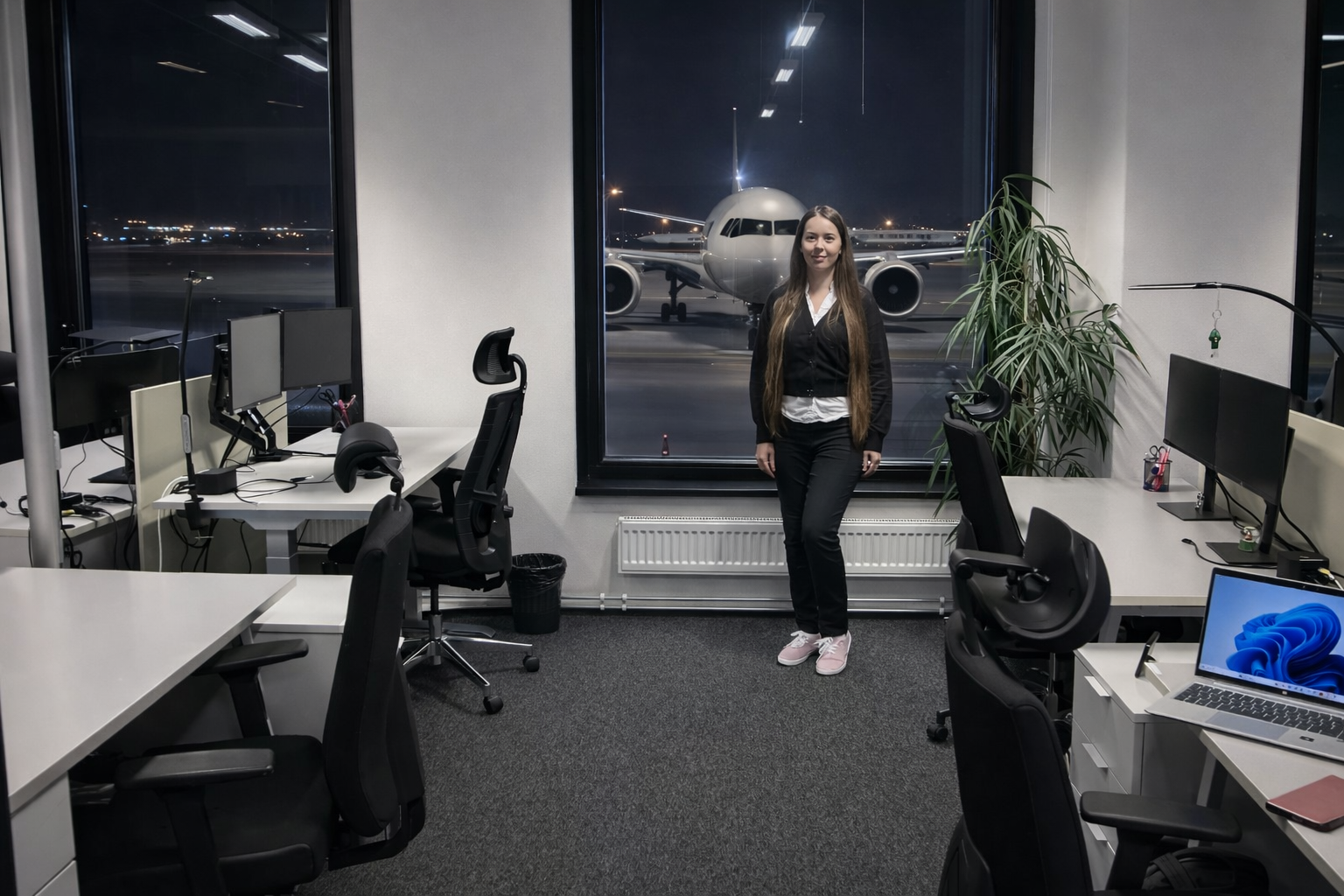
I graduated with an MA in Communication Management, but my interest in the field started much earlier, when I realized that communication is the invisible infrastructure behind every successful organization, movement, and idea.
What truly captivated me was seeing how digital communication could mobilize people across borders, unite diverse teams and turn dispersed voices into collective action. I was fascinated by how communication shapes reality: how it influences choices, structures information, and makes large-scale collaboration possible.
During my exchange studies at KU Leuven in Belgium, where I studied Information Management and Innovation Management and Strategy, my perspective became more nuanced. I started to see communication as a discipline that effectively connects people, data, and technology in addition to human interaction.
I completed a Business Development traineeship in Barcelona in addition to my studies, which exposed me to international markets and commercial strategy. This experience strengthened my ability to work in multicultural environments and connect communication with business objectives.
What is your current role, and what does it entail?
Today, with 3 years of professional experience, I work as a Data Coordinator in Kuoni Tumlare, a global destination management company, a role at the heart of operations, data, technology, and commercial performance.
My role requires daily interaction with procurement managers across different countries. They provide commercial contracts that define rates, conditions, and service terms to deliver exceptional travel solutions. I carefully review and interpret these contracts, analyze rates and conditions, and translate complex information into structured, reliable data within our internal systems that others depend on every day.
A significant aspect of my role involves cross-functional communication. I work daily with operations, sales, and IT teams to resolve data discrepancies and clarify system requirements. Acting as a bridge between business users and technical teams ensures that technology solutions reflect real operational needs.
The value of this work is often invisible when done well but its impact is measurable.
My background in Communication Management has been important. It taught me how to manage stakeholder relationships, navigate ambiguity, structure information clearly, and foster collaboration, all of which are valuable in a global, data-driven workplace.
Which professional achievement are you most proud of?
In 2024, our Data Team received the EHQ Excellence Awards – Business Success Achievements Award for Improving Processes with a Focus on Scalability and Cost Efficiency.
The award recognized our contribution to increased revenue, improved pricing accuracy, and more efficient operations across the organization. By enhancing data quality and standardizing processes, we enabled the company to scale without adding complexity or cost.
I hope that my experience will inspire students to view Communication Management as the cornerstone of a variety of career paths, such as those in data, operations, and technology, where communication subtly facilitates growth, efficiency, and scale.
Could you share some details about your master's thesis? What made it special?
One of the most defining periods of my studies unfolded at the intersection of academic research and real-world impact. While completing my master’s thesis, I was also working as a Communication Specialist for JCI Estonia on the JCI World Conference 2019 in Tallinn - one of the largest international events hosted in Estonia, bringing together around 5,000 business leaders, entrepreneurs, and professionals from across the globe.
The conference theme, “Pure Magic,” symbolized by a digital butterfly, captured a powerful idea of Estonia as a place where cutting-edge technology and pristine nature coexist. Bringing this idea to life required creative storytelling, strategic messaging, and cross-border communication.
As part of a specialized volunteer team, I supported the promotion and communication of key days such as Digital Innovation Day and World Cleanup Day, working closely with international project managers and conducting interviews with campaign leaders.
At the same time, I was immersing myself in my master’s thesis, “The Use of Social Media-Based Community as a Communication Tool: Case Study of the World Cleanup Campaign.” Rather than treating social media as a simple promotional channel, I investigated it as a coordination engine for global collective action. I analyzed how digital communities organize themselves, share knowledge, build trust, and mobilize thousands of people across countries.
For my research, I gained direct access to the campaign’s private Facebook community, which allowed me to observe real interactions, coordination practices, and decision-making processes from the inside.
What made my work distinctive was its dual focus on community engagement and information structure. I showed that successful global campaigns rely not only on inspiring messages, but also on well-designed communication systems that enable trust, coordination, and participation across borders.
This experience shaped how I now approach my professional work: meaningful impact emerges when human collaboration and structured information work together.
What is something about you that would surprise people to know?
Because my role is data-driven, people are sometimes surprised to learn that I also have a strong creative side. I worked as a Content Strategist for Create&Grow digital platform, publishing and producing articles, shaping their online voice while working in my current Data Coordinator role at the same time.
The most exciting part was seeing my articles appear among the top results in Google. It felt like learning the language of the internet and putting communication theory into practice by understanding how ideas travel online, how audiences engage, and how structured messaging can turn information into influence.
What challenges did you overcome thanks to your education?
One of the main challenges in my career has been navigating complexity such as working across contracts, data systems, international suppliers, and multiple internal teams. Misinterpretations or unclear information could easily lead to pricing errors, operational delays, or financial risk.
My education in Communication Management, reinforced by my studies at KU Leuven, equipped me to:
- Information architecture thinking - seeing how data should be structured before problems arise.
- Cross-cultural communication agility - adapting quickly to different professional and national contexts.
- Bridging business and technology - translating needs in both directions.
Instead of feeling overwhelmed by complexity, I learned to design clarity inside it.
A key lesson from your studies that you still use daily
The most powerful lesson I carry with me is this:
Communication is not about talking - it’s about engineering understanding.
Whether I’m structuring data, coordinating or solving IT issues, I constantly ask:
How should information flow so people can act confidently and effectively?
That mindset guides everything I do.
Advice for future Communication Management students
Don’t box yourself into traditional communication roles. Your degree can lead to careers in data, technology, strategy, operations, and global business.
Seek international experiences. Work on real projects. Learn how systems work. One of the most valuable skills you can develop is the ability to turn complexity into clarity.
That’s where real impact happens.