
My Intercultural Collaboration Journey: A Semester I Won’t Forget
When this telecollaboration project began, I did not know what to expect. I saw names from North Central College (Naperville, IL, USA) and felt both excited and nervous. We were strangers in different countries, different time zones, and different cultures, all trying to work together online. Looking back now, after completing four assignments as a team, I can see how much we learned, not only about intercultural communication, but also about each other and ourselves. I would like to illustrate this with a beautiful drawing, as shown in Figure 1.
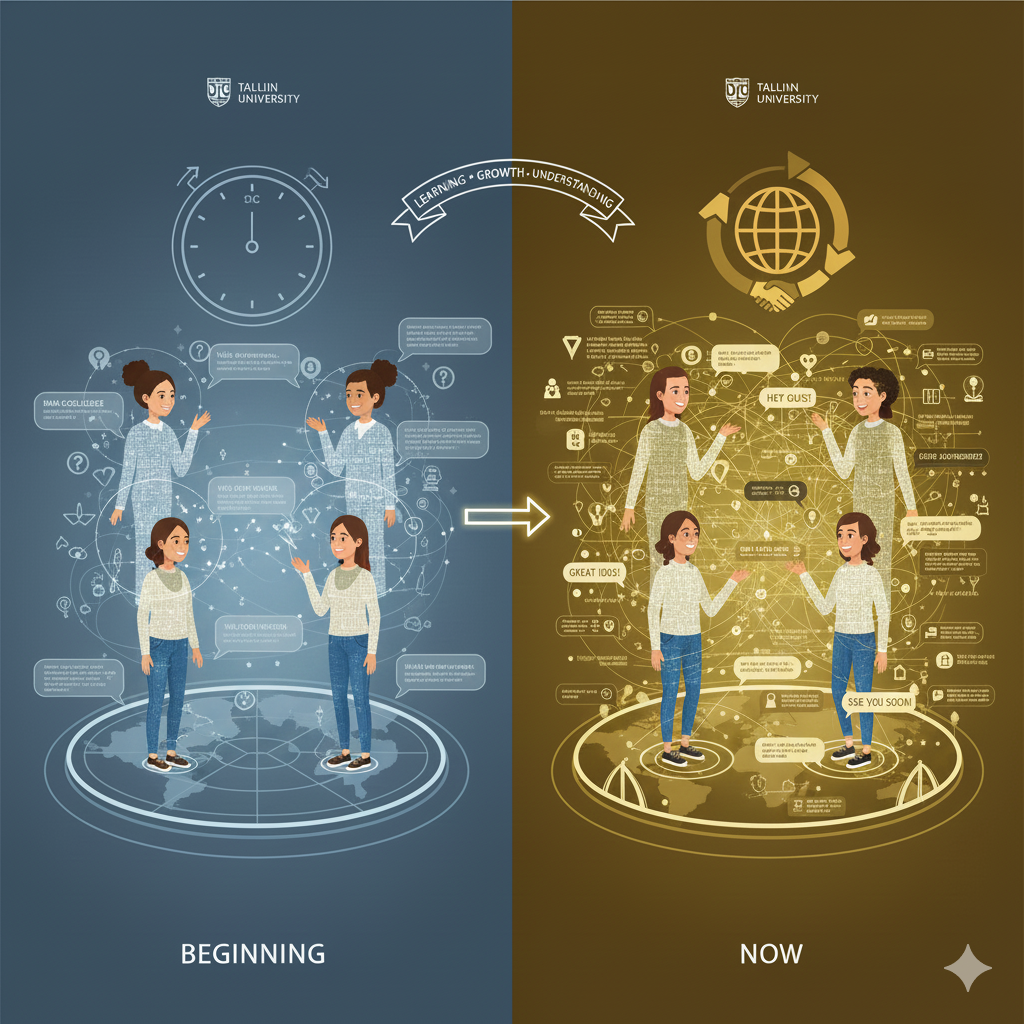
Figure 1. Gemini Generated Image
In the beginning, our messages were extremely polite. Everyone typed carefully, afraid of sounding rude or being misunderstood. Replies came at different speeds, and sometimes it took a moment to understand everyone’s communication style. It felt like we were walking slowly around each other, trying to figure out the “right” way to speak. However, this is normal when people from different backgrounds meet for the first time, especially online.
Over time, something changed. With every assignment, we became more relaxed and comfortable. We slowly moved from formal greetings to more natural conversations. By the time we reached Assignment 4, we were no longer strangers sharing a Google Doc; we had become a small team, familiar with each other’s strengths, communication styles, and even personalities.
One of the biggest themes of this collaboration was how our teamwork evolved. Assignment 1 felt like testing the waters, trying to divide tasks and understand who was strong at what. Assignment 2 went smoother because we were starting to trust each other more. Assignment 3 pushed us deeper, especially when we had to discuss more complex ideas, and that is when our real communication preferences showed. Finally, Assignment 4 was the moment everything came together. The discussions were quicker, the roles clearer, and the teamwork more natural. It felt less like schoolwork and more like a real group project with people I understood.
Another major theme in this journey was navigating intercultural communication challenges. The biggest challenge was time, literally. Our schedules rarely matched, and sometimes we had to wait hours for responses. People communicated differently too: some wrote long explanations, others preferred short messages; some replied immediately, others needed more time. Sometimes messages looked blunt, but later we realized it was just someone’s communication style, not rudeness.
But what impressed me most was how patient and respectful everyone tried to be. We reminded each other gently, divided tasks fairly, and supported whoever was slow or busy. I learned that intercultural teamwork is not about forcing everyone to behave the same; it is about understanding differences and adjusting with kindness.
My personal role across all four assignments was proof reading and document design, and honestly, I enjoyed it. It allowed me to be creative and help present the group’s ideas in a clear way. This role taught me that I am good at organizing information visually, and it gave me confidence in my communication skills. I used to think I was not good at group work, but this experience showed me that I could express myself clearly, ask questions, and contribute meaningfully.
.jpeg)
After four assignments, countless messages, different opinions, and many moments of patience, I can honestly say this collaboration changed me. It made me more confident in international environments. I learned to listen better, communicate more clearly, and appreciate how culture shapes the way we talk. I realized that effective teamwork is not about perfection, it’s about respect, effort, and understanding.
Going forward, I know I will work with people from different cultures again at university, in the workplace, or anywhere life takes me. This telecollaboration prepared me for that. I want to continue being patient, expressing myself more confidently, and recognizing strengths in others. If I could change something, I would try to connect even more personally with my teammates, not only academically, because relationships make teamwork easier.
In the end, what stays with me is not just the assignments we submitted, but the small moments of growth: the awkward first messages, the shared deadlines, the improved conversations, and the final project that felt like a true team achievement. This experience reminded me how powerful intercultural collaboration can be, how people from completely different backgrounds can come together and create something meaningful.
And honestly? I’m proud of us.